
Tag Archives: prayer

Oh, Lord! There’s Spilt Milk on the Floor

While moments of everyday frustration are inevitable – we’ve all experienced a spilt glass of milk, a burnt dinner, or a child’s unexpected mess – some moments, however, seem to appear more troublesome, testing and defining us as Christians. Yesterday, for me, was one of those defining moments.

My workday started as usual: prayer; cup of coffee; morning clean up; weekly scheduled group meeting with my co-workers. And then it happened. It wasn’t a physical spill or a surprise mess; rather, it was the words spoken by a colleague I’ve worked alongside for the past two years – words that landed with a thud, leaving a residue of bewilderment and worse, a bitter sting to my heart.

“Well, no one likes you or what you have to say,” my co-worker sneered jokingly. I had just presented the case for the importance of responding to employee ideas and thoughts. I believed an injustice had been done at the last all-employee company meeting and expressed my concern. His words came as a sharp blow and hung in the air, unprovoked and untrue.

My initial reaction, I confess, was a flash of hurt and resentment, a familiar echo of those moments from my younger years when strangers would cast unkind judgments without knowing a thing about me. It’s a strange and painful experience, isn’t it? To be belittled, to feel unseen and misunderstood, especially within a community where we strive for connection and support. The Bible reminds us that “The words of the reckless pierce like swords, but the tongue of the wise brings healing” (Proverbs 12:18). In that moment, the sharpness of those careless words pushed hard at me.

In a flash, something shifted within me. Perhaps it was the years of seeking God’s wisdom, the countless prayers whispered in moments of uncertainty. Instead of retreating into defensiveness or allowing the negativity to pool, a different response surfaced. A touch of humor, a gentle deflection: “Well, you must have gotten out of the wrong side of the bed.” I chuckled softly. “You should go back and try the other side.”

And then, a balm for my spirit – the unexpected and immediate support of another co-worker, standing up for truth and kindness. It was a beautiful reminder that even in the midst of human failings, God’s light shines through the hearts of others. How true are the words: “Two are better than one, because they have a good return for their labor: If either of them falls down, one can help the other up” (Ecclesiastes 4:9-10). The support was a tangible expression of this truth.

But even as the moment passed, the question lingered: why? Why would someone choose to speak words intended to wound? It’s a question that often leads us down a rabbit hole filled with unfounded assumptions and prideful offenses.

And that’s where the strength of God’s grace comes in, my dear sisters in Christ. It’s in recognizing that sometimes, the people who lash out are the ones carrying the heaviest burdens. Their words, though hurtful, may be a symptom of their own inner struggles, their own spilt milk on the floor of their hearts.

In that realization, I chose the path of prayer. Not a prayer of judgment or resentment, but a prayer of compassion. A prayer for the one who spoke those unkind words: “Oh, Lord,” I whispered, “bless him with understanding. Cover him with compassion, both for himself and for those around him. If his heart is hurting, Lord, bring him comfort. Help him to see the impact his words can have.” This aligns with the powerful teaching of Jesus: “But I tell you, love your enemies and pray for those who persecute you” (Matthew 5:44).

This shift in perspective didn’t erase the sting entirely, but it did transform it. It allowed me to release the need to understand the “why” and instead focus on a response rooted in Christ’s love. It reminded me that my strength comes from God.

As fellow sojourners, we will undoubtedly face moments when the unexpected “spills” happen – when words wound, and misunderstandings pour out. In those times, we must choose to look beyond the surface and acknowledge our own feelings with honesty. We turn to the boundless grace of our Heavenly Father. Most importantly, we choose prayer. This is not a passive resignation but an active offering of love and a plea for understanding. We trust that God will work in ways we cannot see.

And with a resolute heart, as the apostle Paul directs in 1 Timothy 2:1, let us pray for one another, for those who hurt us, and for the healing that only God can truly provide. For in His grace, even the spilt milk on the floor of our hearts becomes that testament to God’s enduring love and compassion.

Leave a comment

Filed under Change and Transformatiom, stories and values

Oh, LORD! I Need a Blessing

Have you ever stood at a crossroads in your life, that pivotal point where one path splits and a choice between two beckons? Perhaps it’s a shift in family dynamics, a new calling, a career change, or even navigating health challenges that demand a personalized approach. In these moments, our hearts often whisper, sometimes even cry out, “Oh, LORD! I need a blessing.”

Recently, as I pondered my own next stage, weighing the potential joys and challenges that lie ahead in my continued work as a senior advocate at a Medicare-approved health plan, the LORD drew my attention to a powerful, yet often overlooked, moment in scripture: the story of Caleb and Achsah, his daughter, in the first chapter of the Book of Judges.

The story involves Caleb, Joshua’s right-hand man, an aging man of unwavering faith and courage, who had promised his daughter Achsah in marriage to whomever could conquer the strongly held Canaanite city of Debir. Othniel rose to the challenge and won her hand (Judges 1: 12-15).

Now, here’s where the story takes a very interesting turn, bringing our focus right to Achsah. It’s as if we’re standing there with her at her own important crossroads, watching as she takes a significant step forward. When she came to her father, she asked for a blessing – and not just any blessing, but a really practical one: ‘You’ve given me land in the South,’ she said, ‘but could you also give me some springs of water?’ (v. 15). And Caleb, being the loving and wise father he was, granted her request, giving her both the upper and lower springs.

My sisters, in Christ, take a closer look, Achsah’s request beautifully illustrates the initial steps we can take when facing a life choice, steps rooted in practicality, commitment, and wisdom, all the while seeking our Heavenly Father’s blessing. Let’s break these down into small, doable steps, just as we navigate our daily lives:

Step 1: Ground Yourself in Practicality

Just as Achsah recognized the aridness of the Negev and the vital need for water, our first step involves a clear-eyed assessment of our current reality and the practical implications of the choices before us.

* What are the tangible aspects of this decision? Consider the resources involved – time, energy, finances, support systems.

* What are the potential practical challenges and benefits? Be honest with yourself about the pros and cons. What might make this new path easier or more difficult in your daily life?

* In my own recent reflections, I had to be practical about my physical energy. While my heart was willing to embrace increasing and new opportunities, my body reminded me of its limitations as I neared my 75th year. Acknowledging this practicality wasn’t a sign of weakness, but of wisdom.

Step 2: Embrace the Commitment

Through Achsah’s thoughtful and practical approach, we see the importance of the long-term commitment she was willing to embrace. This mirrors the broader truth that making a significant life choice requires each of us to invest ourselves fully, determined to see it through, even when challenges inevitably arise.

* What level of commitment does this choice require? Are you prepared to dedicate the necessary time and effort?

* What are your motivations? Are they rooted in a genuine calling or a fleeting desire? True commitment stems from a deep-seated purpose.

* For me, committing to advocating for senior’s health care and alternative medicine requires acknowledging that there will be days when my physical strength wanes. My commitment lies in finding sustainable ways to contribute in a meaningful way by leveraging my cognitive and emotional resilience.

Step 3: Seek Wisdom and Discernment

Achsah sought her father’s blessing, recognizing his wisdom and authority. As daughters of our Heavenly Father, we too should seek His guidance and discernment.

* Pray for wisdom: Ask God to grant you clarity and understanding as you weigh your options. James 1:5 reminds us, “If any of you lacks wisdom, you should ask God, who gives generously to all without finding fault, and it will be given to you.”

* Seek godly counsel: Talk to trusted mentors, pastors, or wise friends who can offer a biblical perspective and sound advice.

* Listen for God’s still, small voice: Be attentive to the promptings of the Holy Spirit in your heart. Keep the Word of God before you.

Step 4: Ask for God’s Blessing – The Land of Springs

Achsah didn’t just ask for land; she specifically asked for the land with springs of water – a source of life, nourishment, and sustenance. When we seek God’s blessing on our choices, we’re not just asking for His approval, but for His provision, His guidance, and His life-giving presence to flow through our journey.

* Present your choices to God in prayer: Be specific about your hopes, your fears, and your need for His guidance and blessing.

* Trust in His provision: Just as Caleb provided for Achsah, our Heavenly Father promises to provide for those who seek Him and align their lives with His will.

* Look for the “springs of water” – the sources of life and strength He provides along the way. This might be unexpected support, moments of clarity, or a deep sense of peace.

My dear sisters, stepping into a new season of life can feel daunting, but it’s also filled with potential and purpose. By grounding ourselves in practicality, embracing commitment, seeking wisdom, and most importantly, asking for our Heavenly Father’s blessing – the land of springs – we can move forward with confidence and hope, knowing that He walks alongside us, providing everything we need for the journey ahead.

What life choice are you facing today? Take a moment to bring it before the Lord. Ask for His blessing, and trust that He will guide you to the land of springs, of refreshment, and fullness of life. 

Leave a comment

Filed under Change and Transformatiom

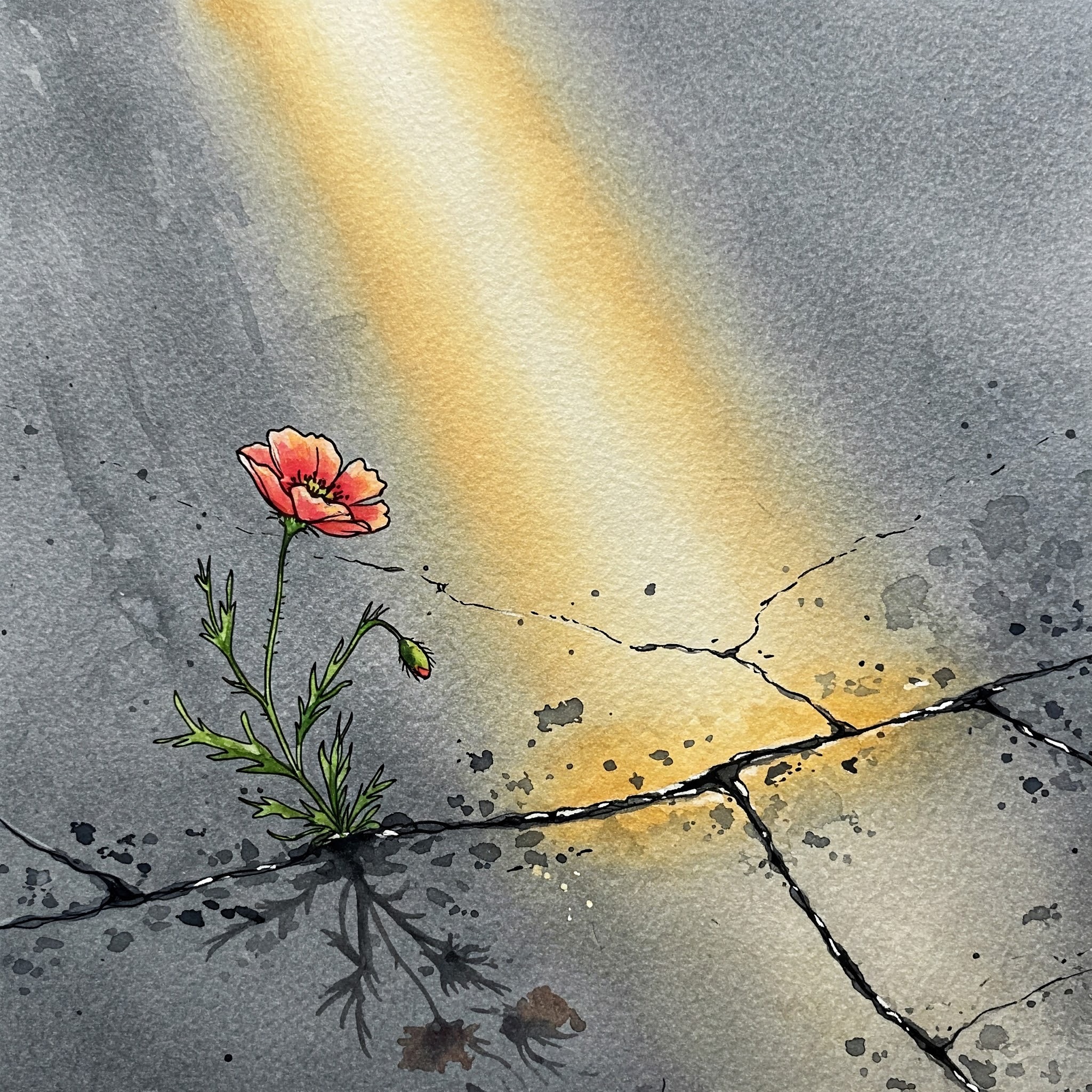
Oh, LORD! There’re Weeds in My Garden

Recently, my focus turned to my spring garden. With packets of seeds in my hand and a hand shovel, I envisioned delicate daisies, vibrant wildflowers, and perfectly unfurled ferns. Some days, I would lose myself in the intricate details of each emerging petal. Then came the shock. What I believed was a budding spring flower was nothing more than a worthless weed in disguise! Disbelief washed over me as I shook my head. “Where did you even come from?” I murmured. In that moment, the Holy Spirit spoke, His voice gentle yet powerful. “Just like your heart, daughter,” He whispered, “it happens the same way.” The “it”? Those subtle distractions that pull me away. Things that somehow take root in my heart, keeping me from a closer walk with Jesus.

Haven’t we all experienced this? We diligently tend the garden of our hearts. We plant seeds of faith, hope, and love. Our vision is a flourishing space, alive with the fruits of the Spirit. But then, we spot them. The unwelcome intruders. The persistent weeds that seem to sprout despite our best efforts. These are not the beautiful blooms we anticipated. Instead, they manifest as anxieties and worries. They appear as persistent temptations and ingrained habits that stifle our growth. It’s the inner critic whispering negativity. It’s the external pressures pulling us from God’s intended path.

Consider the parable of the wheat and the tares in Matthew 13. It vividly illustrates how the enemy often sows seeds of doubt, discord, and difficulty, even in the most fertile ground. And while Matthew 16 doesn’t explicitly mention weeds, the context of Peter’s struggle to grasp Jesus’s impending suffering reveals a crucial truth. Even those closest to God, individuals with the purest intentions, can be susceptible to worldly thinking. This thinking can choke out spiritual understanding. Peter, in his human desire to redirect Jesus, inadvertently became a voice of opposition, a “stumbling block” (Matthew 16:23)—an uninvited weed in God’s divine plan.

This truth resonates deeply within our own journeys. We strive for spiritual maturity. Yet, we so often find ourselves battling internal “weeds.” Sproutings of pride, insecurity, worry, or fear. We also encounter external “weeds.” These might take the form of challenging relationships, difficult circumstances, or the alluring pull of worldly distractions. These weeds can feel overwhelming. They threaten to suffocate the very life of our spiritual growth.

But take heart, my dear companions in Christ. The presence of weeds does not signify a lost garden. Instead, it signifies our active participation, through God’s Holy Spirit, in His ongoing work of cultivation. The Apostle Paul, a man intimately acquainted with relentless trials and inner struggles, declared with unwavering conviction: “For I am sure that neither death nor life, nor angels nor rulers, nor things present nor things to come, nor powers, nor height nor depth, nor anything else in all creation, will be able to separate us from the love of God in Christ Jesus our Lord” (Romans 8:38-39, ESV). This powerful truth reminds us that even amidst the weeds, God’s unwavering love remains. It is our constant source of strength and hope. His love provides security, safety, connection, and purpose. 

So, how do we deal with these persistent weeds? One vital tool in our spiritual gardening kit is the power of prayer, especially when it intertwines with praise. Praise is more than mere gratitude for blessings received. It is an active acknowledgment of God’s sovereignty. It recognizes His goodness and His unfailing love, even amidst our struggles. When we begin our prayers with heartfelt praise, our focus shifts. It moves from the weeds to the Gardener. We acknowledge His power to work in and through our challenges.

Praising God in the face of difficulty is like spraying (very carefully) the homemade mixture of vinegar, soap, and salt on those unwanted weeds. It exposes their powerlessness against His glory, effectively killing their roots. Simultaneously, it strengthens our faith. It reminds us that He is far bigger than any obstacle we face. This cultivates an attitude of dependence on Him, preventing us from being consumed by the problem itself. As we consistently offer praise, our prayers transform. They become more than just requests. They become powerful declarations of faith, aligning our hearts with God’s will and inviting His transformative power into our lives.

So what about those weeds that grow without permission? My sisters, do not be discouraged by the weeds in your garden. They serve as a reminder that growth is a process, not a destination. Embrace the ongoing work of tending your hearts with prayer. Let it be deeply rooted in unwavering praise. Remember the steadfast love of God that surrounds you. No weed, no struggle, can ever sever that bond. Continue to cultivate your faith. Know that with God’s help, your garden will not only survive but flourish. It will bear abundant blossoms and fruit for His glory. Keep digging, keep praying, keep praising. Watch as the Master Gardener transforms your challenges into a channel for deeper growth and unwavering faith.

Leave a comment

Filed under Change and Transformatiom

My Father’s Chair

Oddly, one of my favorite childhood memories is that my father’s reading chair. It was softly padded, unlike the hard wooden desk seats at school. And it was covered in a wonderfully warm brown textured woven fabric. It had a separate footrest with wheels so that it could roll easily across the old wooden floors. I remember a time when I was called into my father’s room so that he could review my most recent report card and my progress at school.

It felt like I was entering the inner sanctum of our home, a very special place. As I knocked softly, my father motioned with his hand for me to enter and then he gently pointed to the footstool at his side. I took my seat next to him. Nodding, he reached for my report card, glanced it over slowly, and then began our conversation.

Today, as a Christian life coach, I realize that this memory serves me well as I grow in my Christian walk. It gives me the ability to imagine that, as my heavenly Father, God wants to talk with me and invites me to sit with Him on His throne.

As I share this story with my clients, I realize that many Christians do not understand the purpose or the meaning of being invited into God’s throne room. Today, we are going to explore the Biblical understanding of God’s throne and throne room, and perhaps most importantly, I’ll share with you 5 ways that you can enter His throne room and draw closer to God.

Introduction

From the Old Testament Bible, the Hebrew word for throne means a seat of honor and dignity. It also represents one’s power and authority to rule a people and a kingdom. For example, King Solomon’s throne was, according to Hebrew tradition (www.chabad.org), located in the Lebanon Forest just outside the City of Jerusalem. It was made from ivory and overlaid with the precious gold metal. His throne is described in 1 Kings 10:18-20:

18 Moreover the king made a great throne of ivory and overlaid it with the best gold.

19 The throne had six steps, and the top of the throne was round behind: and there were stays on either side on the place of the seat, and two lions stood beside the stays.

20 And twelve lions stood there on the one side and on the other upon the six steps: there was not the like made in any kingdom.

Here in the throne room, King Solomon met with his counselors, maintained the peace of his kingdom, administered matters of law and justice, and saw visiting ambassadors and dignitaries. Solomon’s throne reflected his position, power, and authority.

Purpose and Meaning

But what about God and His throne room? The Bible tells us that the throne room is where God dwells and reigns as King over all creation. It is a place of great power and majesty, where God’s glory is revealed. And, although, the Bible does not give us a specific physical location for the throne room of God, it does describe it as being in the third heaven, above the earth in the City of God.

The Bible gives us important glimpses into the throne room of God (e.g. Psalm 104:1-4 & Psalm 99:1-9). Notably, in the book of Revelation, the apostle John sees a vision in which God is seated on a throne of jasper and surrounded by twenty-four elders, four living creatures, and seven lamps of fire burning (Revelation 4:2-11). the throne room is sometimes described as being a place of great light and glory, and other times as being a place of great mystery and wonder.

The book of Isaiah adds to our understanding. The prophet Isaiah sees a vision in which God is seated on a high and lofty throne, surrounded by seraphim. filled with smoke, and seraphim crying out, “Holy, holy, holy is the Lord of hosts! (Isaiah 6:1-5).”

Although there are many more bible passages about God’s throne, these descriptions suggest that the throne room of God is a place of great beauty and splendor. And we learn a lot from these descriptions, especially about God’s very nature. For example, we find that:

  • God is holy and majestic. We should approach him with reverence and awe.
  • God is all-powerful and all-knowing. He is in control of everything that happens in the world.
  • God is loving and merciful. He wants to have a relationship with us.
  • God is just and righteous. He will judge all people according to their deeds.
  • God is a God of grace and forgiveness. He is willing to forgive us if we repent of our sins.

Suggestions & Summary

Without a doubt, the throne room of God is a place of great mystery and wonder. Perhaps, most importantly, because of the sacrifice that Jesus made on Calvary’s cross (Hebrews 4:16), it is the place where we can bring our prayers and requests to God and know that He hears us and will answer us.

There are many ways to draw closer to God’s throne. Here are a few suggestions:

  1. Pray. Prayer is the most direct way to communicate with God. When we pray, we are inviting God into our lives and asking for His help and guidance.
  2. Read the Bible. The Bible is God’s word to us. When we read the Bible, we are learning about God and His character.
  3. Attend church. Church is a place where we can worship God and connect with other believers. It is also a place where we can learn more about God and His Word.
  4. Serve others. When we serve others, we are imitating God’s love and compassion. This is a powerful way to draw closer to Him.
  5. Spend time in silence and reflection. This can be a time to listen to God’s voice and to be still in His Presence.

As I sit and think about the days passed, the memory of my earthly father sitting in his reading chair reminds me not only of his counsel to succeed and the commitment involved but it reminds me of his love for me; a time of closeness and understanding. Importantly, the memory also extends itself into my spiritual walk and encourages me at the age of 73, that, because of Jesus, our Heavenly Father invites us to enter and sit with Him in His throne room to talk about our concerns, share with us His direction, His love, and His wisdom.

Leave a comment

Filed under Change and Transformatiom

Walking in the Light

Recently, I had a question posed to me about the Christian understanding of demonic activity.  I reached for my Bible on my worktable to see what the Word of God had to say on the topic. From my previous studies, I knew that Jesus had interacted on several different occasions with demonic presence and activity.

Demons are depicted, in the Bible, as evil disembodied spirits that tempt people to sin and can possess people’s bodies. In general, sin is thought to be:

  • A distortion of our true nature
  • A violation of God’s law.
  • A rebellion against God’s authority.
  • An act that separates one from God.
  • A destructive force to ourselves and others.
  • A matter requiring forgiveness through Jesus Christ.

Over the years as a Christian life coach, I’ve learned that, in general, conservative Christians believe that demons are real and that they can have a negative impact on people’s lives. Most believe that demons seek to tempt us to sin in our thoughts, our words, as well as our behavior. In today’s blog, we look at both types of activities and bring clarity to the topic by defining the terms and then looking at specific instances in the Bible of both temptations and possessions.

Demonic Temptations: A Bible dictionary defines temptation as “an inducement to sin, that is, to do something wrong or evil.” It is often used in the context of a person being tempted by the devil or by their own lustful desires.

From biblical accounts, we learn that one of the major task of demons is tempting people to sin. They may tempt people to do things that are harmful to themselves or others, such as stealing, lying, or committing acts of violence. Or, they may also tempt people to doubt God and turn away from their faith.

The Bible contains many examples of this type of temptation. For example, in the Book of Genesis, Adam and Eve are tempted by the serpent to eat from the tree of knowledge of good and evil. When they eat from the tree, they are disobeying God’s command, and they are cast out of the Garden of Eden.

But it wasn’t just Adam and Eve, Jesus himself was also tempted by the devil in the wilderness. The devil tempted Jesus to turn stones into bread, to throw himself down from the temple, and to worship him. Jesus resisted all the devil’s temptations.

The Bible teaches that temptation is a common experience for all people. However, it also teaches that we can overcome temptation through faith in God and through the power of the Holy Spirit.

Importantly, James 1:13-15 tells us that “When tempted, no one should say, ‘God is tempting me.’ For God cannot be tempted by evil, nor does he tempt anyone; but each person is tempted when they are dragged away by their own evil desire and enticed.”

And notably, 1 Corinthians 10:13 reveals that “No temptation has overtaken you except what is common to mankind. And God is faithful; he will not let you be tempted beyond what you can bear. But when you are tempted, he will also provide a way out so that you can endure it.”

These are just a few examples of demonic temptation in the Bible. They show that demons are real and that they can tempt people to sin. They also show that God provides a way of escape so, we can be strong in our faith and resist temptation. But what of demonic possession? How does it differ? And what examples can we look at?

Demonic Possession: Demonic possession is another more extreme form of demonic activity. By general definition, it occurs when a demon takes control of a person’s body and mind. Several Hollywood movies depict and sensationalize this type of take over. People who are possessed may exhibit strange behavior, such as being violent, or having superhuman strength. They may also have knowledge that they could not have obtained on their own. Of particular interest, are two examples found in the Gospels of Mark and Matthew:

  • The Gadarene Demoniac found in Mark 5:1-20. In this passage, Jesus encounters a man who is possessed by a legion of demons. The demons are so many and so powerful that they have caused the man to live in the tombs and to be physically uncontrollable. He appears as a madman to family, friends, and neighbors. The townspeople are afraid of him and what he might do. The narrative tells us that Jesus casts out the demons and restore the man to his right mind.
  • The Boy with an Evil Spirit is described in Matthew 17:14-21. In this passage, Jesus encounters a boy who is possessed by an evil spirit. The spirit causes the boy to have seizures and to speak incoherently. We learn that Jesus casts out the demonic spirit, and the boy is immediately healed.

These are just two examples of demonic possession in the Bible. There are many more passages that could be mentioned. These passages show that demons are real and that they can have a negative impact on people’s lives. They also show that Jesus has the power to cast out demons and to heal people who are possessed. It is important to note that as Christians, Jesus gives us the power and authority to cast out demonic spirits (Mark 16:17; Luke 10:17-20; Acts 19:11-12).

How to Resist Demonic Temptations and Possession

Perhaps the most important question that arises is: How do we as Christians resist demonic temptations and possession? According to the Word of God, there are several ways given to us to do so which include:

  • Praying: Prayer is one of the most important ways to resist demonic activity. When we pray, we are asking God for help and protection.
  • Fasting: Fasting is another way to show God that we are serious about resisting temptation. When we fast, we are denying ourselves food and other physical pleasures. This can help us to focus on spiritual matters and to resist temptation.
  • Reading the Bible: Reading the Bible can help us to learn about God’s will for our lives and how to resist the devil. The Bible contains many examples to encourage us of people who have resisted temptation and overcome evil.
  • Seeking Christian counseling: If you are struggling with demonic activity, it is important to seek professional help. A Christian counselor can help you to understand what is happening and to develop a plan for overcoming temptation.

Demonic temptations and possession differ in several ways. They are both real spiritual threats of which Christians should be aware. As a Christian Life Coach, I emphasize that there are also several ways to resist these threats. By praying, fasting, reading the Bible, and seeking Christian fellowship and counseling, we can stop the devil in its tracks and live a life that is pleasing to God.

I hope this blog post has been helpful to understand not just the difference between demonic temptations and possession but practical ways to respond as a maturing Christian. Both temptations and possessions are activities of demons; both are meant to get you off course. Be smart! Be aware! Avoid both of these traps by recognizing your weaknesses, walking in the light of God’s Word, and calling on the name above all names—the name of Jesus.

Mary Buck, PhD / Christian Life Coach /

As God gets bigger in our lives–we get stronger!

MLBuck©2023

Leave a comment

Filed under Change and Transformatiom